As the game gets closer, your heart races and your thoughts spiral toward everything that could go wrong. You know you want to play, but the pressure makes part of you want to avoid the moment completely.
Almost every athlete gets nervous before competition, pre-game anxiety is incredibly common. The important thing to understand is that anxiety is not a sign that something is wrong with you. In many cases, it’s actually a sign that you care.
From a sport psychology perspective, anxiety happens when the brain perceives a threat. Not usually a physical threat, but a psychological one (e.g. fear of failure, embarrassment, injury, judgment, or letting others down). Your body then activates the fight, flight, or freeze response, the same survival system designed to protect us from danger. This creates two types of anxiety:
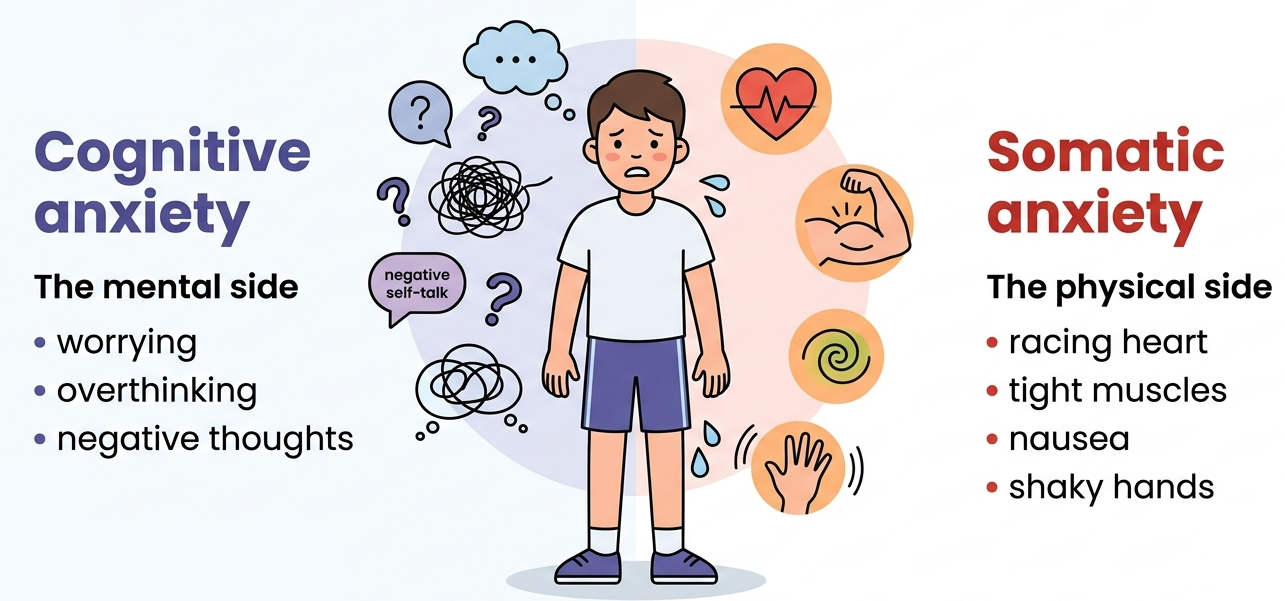
Interestingly, anxiety itself is not always harmful. Research shows that some stress and activation can actually improve performance by increasing energy, focus, and motivation. The goal is not to completely eliminate nerves, it’s to learn how to manage them effectively.
Pre-game anxiety can affect athletes mentally, physically, and behaviourally.
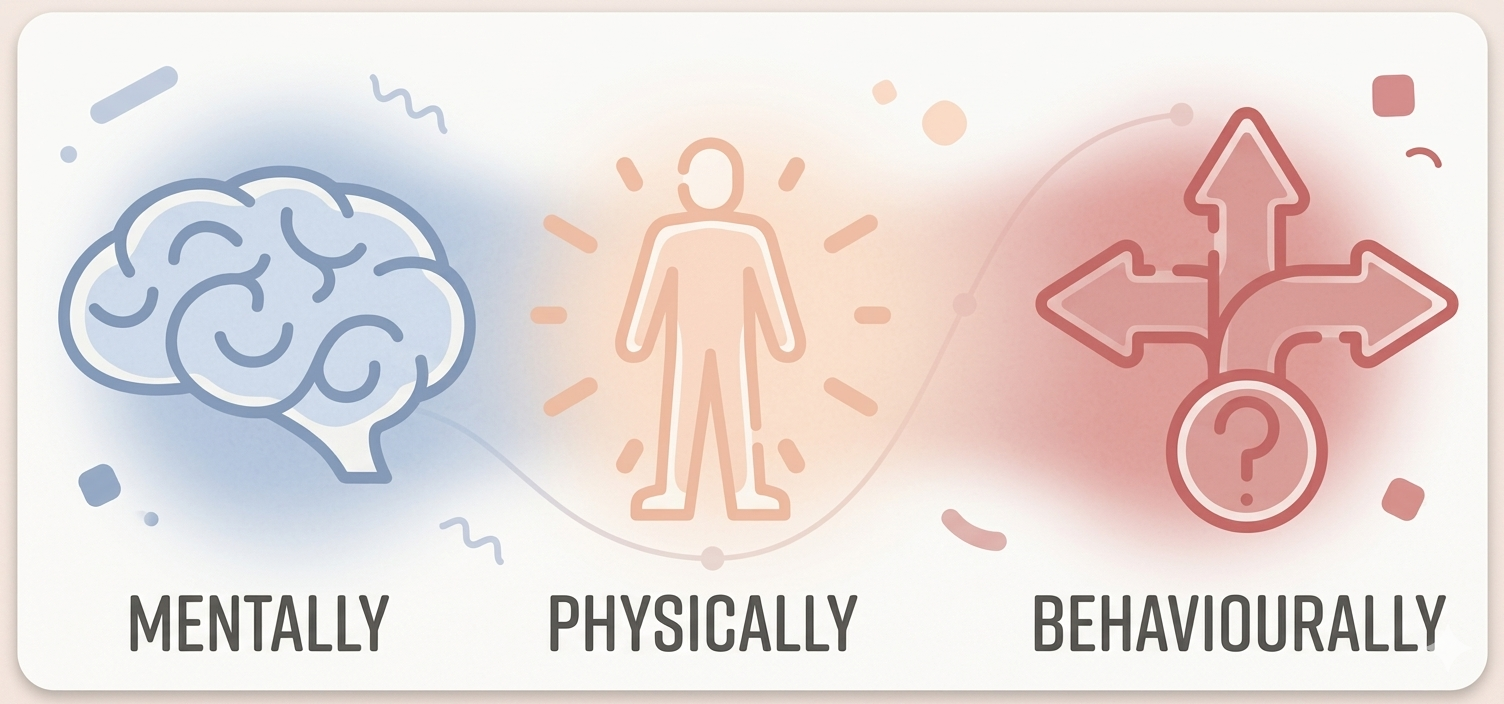
Athletes often experience excessive worry, fear of failure, negative self-talk, and overthinking technique or mistakes. Additionally, one of the biggest performance problems caused by anxiety is attentional disruption, where athletes become distracted by worries (“what if I mess up”), or become overly self-focused and start consciously trying to control movements that are normally automatic.
Common physical symptoms include increased heart rate, muscle tension, short / shallow breathing, and an upset stomach. These symptoms are uncomfortable, but they are also completely normal biological responses to stress. Trying to completely avoid them can actually make them worse.
Anxiety can also lead to playing too cautiously, trying too hard or rushing, dropout, and avoidance of anxiety inducing situations.
Sport psychology doesn’t aim to “remove” anxiety completely. Instead, we help athletes build skills to manage pressure more effectively.
Thoughts are not facts. Just because the mind says “I’m going to fail” doesn’t mean it’s true. A major part of sport psychology is learning to respond differently to negative thinking. This can include: reframing / countering (replacing unhelpful thoughts with constructive ones), diffusing (allowing thoughts to simply pass through), and thought stopping (interrupting spiralling thoughts).
You cannot fully control outcomes, opponents, or other people’s opinions. But you can control your preparation, effort, attitude, and response.
This is important in helping reduce tension in the body to minimise the likelihood of skill errors. Techniques include controlled breathing, progressive muscle relaxation, and incorporating these into your routines.
Nerves are not the enemy. More often than not, they’re proof that the moment matters to you. The goal is not to eliminate anxiety completely, but to learn how to perform effectively alongside it. The athletes who succeed long-term are usually not the ones who never feel anxious, but the ones who learn the skills to effectively handle these feelings. Remember, confidence is not the absence of nerves, it’s the ability to trust yourself and respond well under pressure despite them.