Training was going really well and everything felt on track for the season. Then suddenly… injury. Now, instead of focusing on recovery, your mind is stuck on when you’ll be back, whether someone else will take your spot, and what it means for your future in sport.
When an athlete gets injured, the impact isn’t just physical, the mind reacts strongly too. Most athletes go through three common emotional phases following injury:
Injury-focused thinking – At first, attention is fully on the injury itself, including pain, severity, cause, and what it means for training, competition, and daily life.
Emotional reaction phase – It’s common to experience frustration, stress, sadness, anger, low confidence, or feeling disconnected from sport and teammates.
Adjusting and coping – Over time, many athletes begin to accept the injury, feel more in control, and focus on what they can do to support recovery and progress.
These emotional phases align closely with three key stages of athlete injury recovery:
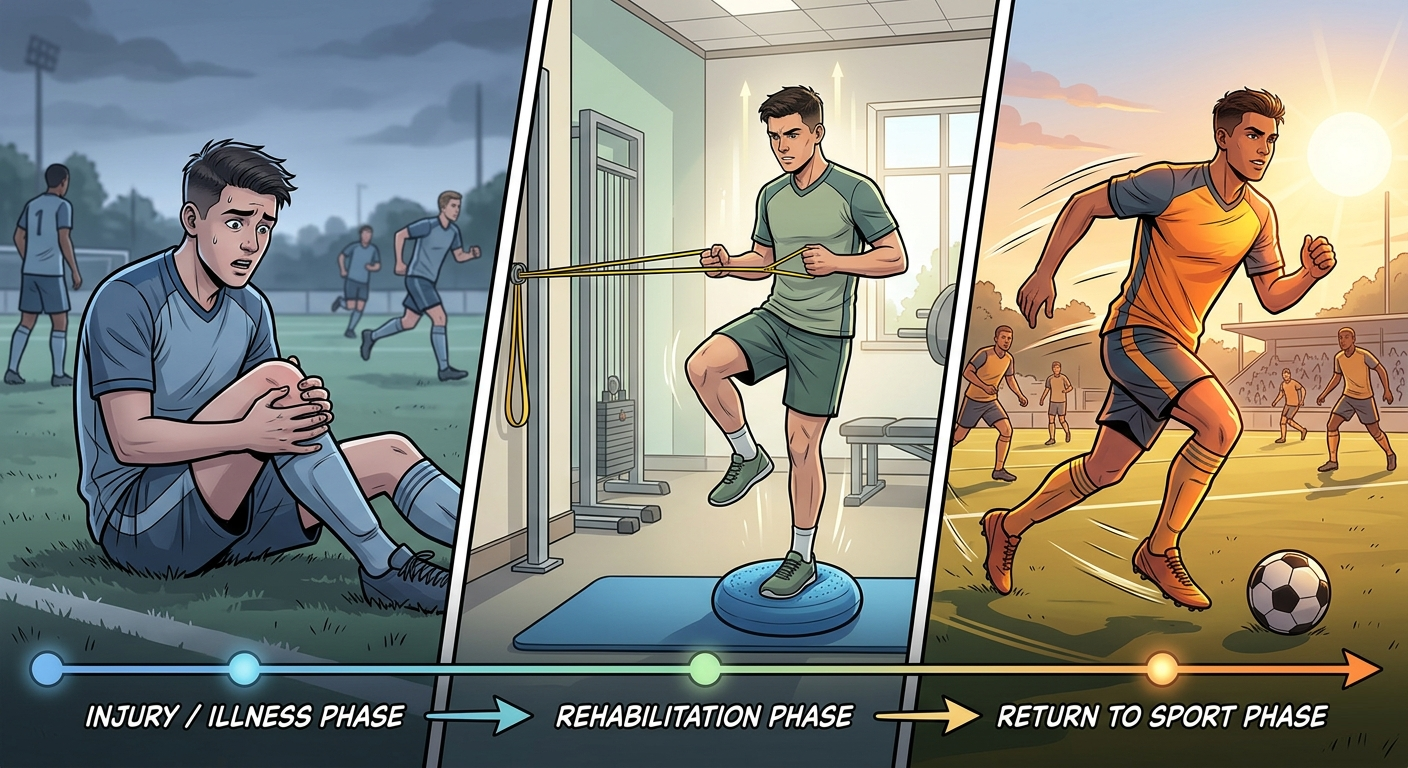
The injury/illness phase – Athletes process the shock and emotional impact of being injured and removed from sport.
The rehabilitation phase – Athletes work to maintain motivation, consistency, and confidence during the often slow rehab process.
The return-to-sport phase – Recovery is not just physical; athletes must rebuild trust in their body, confidence in movement, and readiness to perform under pressure.
Some psychological reactions to sports injury are very common during rehabilitation and return to sport. While every athlete responds differently, the most common experiences include:
Anger and confusion – Feeling frustrated or overwhelmed when injury disrupts goals, training, or competition.
Obsession with return-to-play date – Focusing heavily on return timelines, often leading to stress, impatience, or comparison with others.
Returning too soon and reinjury risk – Some athletes rush back before they are fully ready, increasing the chance of reinjury.
Guilt about letting the team down – Feeling responsible for missing training, games, or performance contributions.
Loss of athletic identity – Injury can create uncertainty or emptiness when sport is a major part of identity.
Fear of reinjury – Athletes may overthink movement, hesitate, or struggle to fully trust their body again.
Isolation and disconnection – Missing training and team environments can lead to feeling cut off from teammates and support networks.
Concerns about strength and fitness loss – Worrying about changes in body composition or performance during rehab can affect confidence.
 Goal Setting
Rehabilitation can feel slow and repetitive. Goal setting helps maintain motivation, confidence, and structure by focusing on small process goals and “daily wins” rather than only the final return-to-play outcome.
 Cognitive Reframing
Injury often leads to negative thoughts like “I’m falling behind” or “I’ll never get back to my best.” Cognitive reframing helps athletes challenge these thoughts and build more balanced, resilient thinking during recovery.
 Imagery and Visualisation
Imagery allows athletes to mentally rehearse skills, movement, and game situations during rehab. This “mental practice” can support confidence, pain management, movement quality, and return-to-sport readiness.
 Building Strong Support Systems
Social support is one of the strongest predictors of successful sports injury recovery. Staying connected with coaches, teammates, family, and health professionals helps reduce isolation and improve coping.
 Stress Management
Managing stress during return to sport is important, as higher stress can increase reinjury risk by narrowing focus, affecting decision-making, increasing muscle tension, and reducing movement coordination.
Although sports injuries are challenging, injury rehabilitation can also present an opportunity to improve areas often neglected during full training loads. With the right psychological support, athletes can use injury recovery to develop resilience, confidence, leadership skills, tactical understanding, mental performance skills, and a stronger sense of identity outside of sport.