Your teammate turns the ball over for the third time in a row. Frustrated, you immediately tell them: "come on, you've got to be better than that”. You weren't trying to upset them, you just wanted them to lift their performance. But for the rest of the game they become quieter, more hesitant, and seem reluctant to take responsibility when they receive the ball.
Put simply, the purpose of communication is to deliver information that leads to a desired outcome.
Many athletes and leaders believe that communication should be judged by what they intended to say.
The problem is that communication doesn't work this way.
From a psychology perspective, communication is not judged by the sender's intention, it's judged by the receiver's perception. In other words, what matters most is not what you say, but what the other person hears.
This is especially important in sporting environments where confidence, pressure, emotions, and team dynamics all influence how messages are interpreted. A comment intended as constructive feedback may be received as criticism. A message intended to motivate may actually reduce confidence.
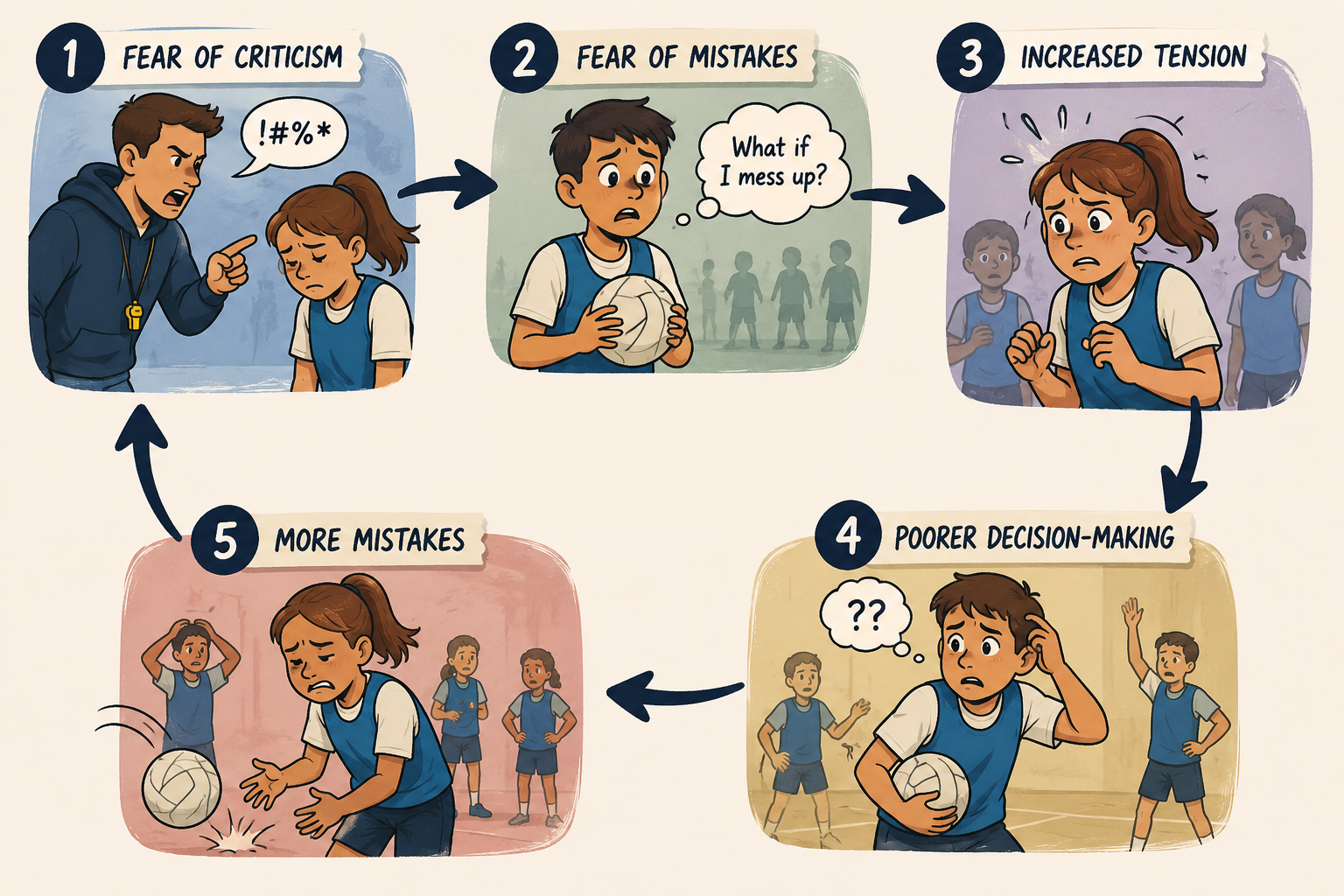
When athletes feel judged, criticised, or worried about making mistakes, they often become more hesitant and self-conscious. Instead of focusing on performance, they begin focusing on avoiding failure. This can create a cycle:
Communication also affects more than the person receiving it. Other athletes are constantly observing how teammates are treated. A player may think:
"If they're speaking to him like that, what will happen if I make a mistake?"
Over time, this can reduce psychological safety, the feeling that you can take risks, ask questions, and make mistakes without fear of humiliation. Research consistently shows that psychologically safe sporting environments are linked to better learning, stronger relationships, greater athlete confidence, and improved team performance.
Many leaders believe they must choose between being supportive and holding high standards. In reality, the most effective communicators find ways to achieve both. The goal is to deliver feedback it in a way that maximises learning, confidence, and motivation while minimising unnecessary negative consequences.
Some research-backed strategies for delivering effective feedback include:
Positive reinforcement is also a critical part of effective leadership communication, it helps build trust, confidence, and psychological safety, making athletes more receptive to constructive feedback when it is needed. When people consistently feel supported, they are less likely to become defensive and more likely to engage with feedback in a productive way.
Many leaders focus heavily on correcting mistakes, but research suggests that high-performing teams and relationships are built on far more positive interactions than negative ones. Studies have found that successful teams tend to demonstrate approximately five positive interactions for every negative interaction (Losada & Heaphy, 2004). A useful question for any leader to ask is:
"If I've delivered a message that may have been perceived as harsh today, how many times have I also shown genuine encouragement, support, or appreciation?"
Effective leadership communication is about more than delivering a message, it's about creating a positive outcome. Before giving feedback, ask yourself:
Effective leadership communication requires self-awareness. Great leaders understand that different athletes respond differently, and they adapt their communication style accordingly.
Remember, most people do not judge us by what we intended to say. They judge us by how our communication made them feel.