"You want to be a regular in the senior team by the end of the season. You train hard and hope your performances improve, but you're not entirely sure what you should be focusing on each week to give yourself the best chance. As progress feels slow, you start to lose confidence and question whether your training is actually making a difference".
Every athlete has goals. You might want to make the starting team, earn a representative selection, return to your best after injury or become a more consistent performer. But having a goal doesn't automatically mean you'll achieve it.
The difference often comes down to how effectively you set your goals. Without a clear plan, even the most ambitious targets can become little more than good intentions. Effective goal setting in sport psychology is about turning those intentions into specific actions, creating a structure for improvement and making sure your everyday efforts are moving you in the right direction.
Goal setting involves identifying what you want to achieve and working backwards to establish how you'll get there. Research suggests that well-designed goals can improve motivation, effort, persistence, focus and performance.
In sport psychology, goals generally fall into three categories:
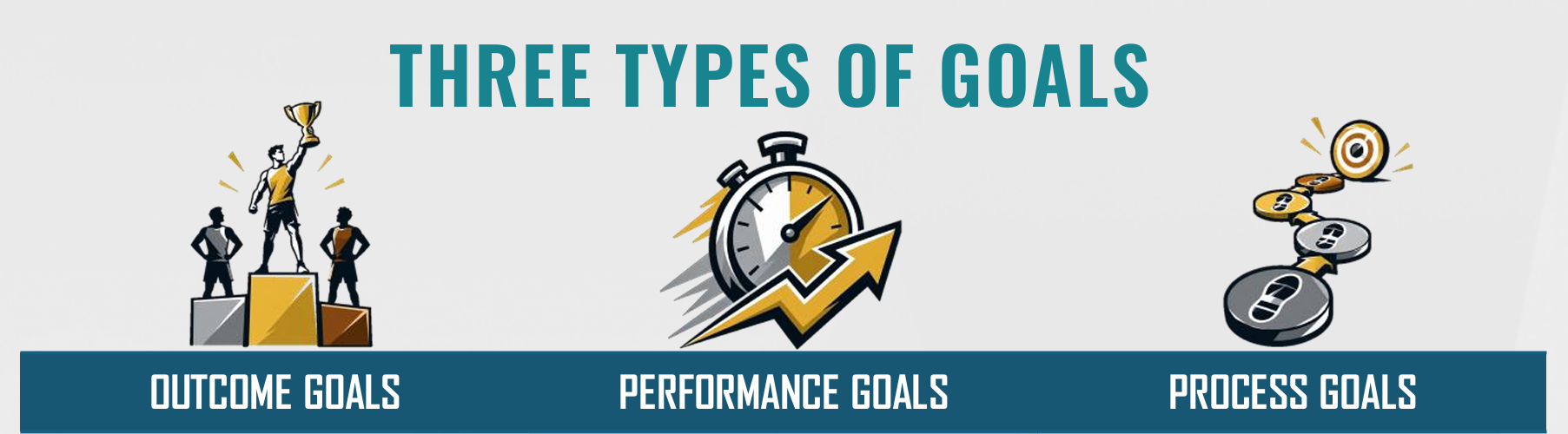
An effective approach combines all three. Outcome goals provide the destination, performance goals help you measure improvement, and process goals guide what you do along the way.
This distinction matters because focusing exclusively on results (outcome goals) can increase pressure without giving you a clear idea of what to do differently. Process goals, on the other hand, direct your attention towards actions you can control.
Effective goals give training purpose. Instead of simply turning up and completing a session, you know what you’re working on, why it matters and how you’ll recognise improvement.
But poorly structured goals can have the opposite effect. Goals that are vague, unrealistic or too numerous can leave you overwhelmed or unsure where to direct your effort. Similarly, setting a target without a plan makes it difficult to translate motivation into consistent action.
Another common trap is failing to review progress. If you don’t track what’s changing, you might continue using an ineffective approach or become discouraged despite making genuine improvements.
The goal isn’t just to set a target. It’s to create a system that helps you work towards it, recognise progress and adjust when necessary.
In sport psychology, we work on making goals clear, meaningful and actionable. The following five-step process is a practical way to get started.
Identify one clear area of development. Avoid vague goals such as "be a better player."
Example: Improve my ability to complete forward passes under pressure.
Being specific gives your training direction. Without it, you can put in plenty of effort without consistently targeting the skill you need to improve.
Set a goal that stretches you without being unrealistic. Consider your current ability, available training opportunities and the time you have.
Example: Improve my success rate on forward passes from 6 out of 10 to 8 out of 10 over the next six weeks.
A goal that's too easy may not encourage development, while one that feels impossible can undermine motivation and confidence.
Identify the specific behaviours and training activities that will move you towards your goal.
Example: Complete targeted passing drills twice a week, practise receiving under pressure.
This is where intention becomes action. Without a clear strategy, even a well-written goal can remain an aspiration rather than something you actively work towards.
Choose a simple way to monitor whether your efforts are working. This might involve recording performance statistics, reviewing training footage, seeking coach feedback or reflecting on how consistently you executed a skill.
Example: Record successful forward passes out of 10 attempts during a weekly drill, using similar conditions where possible and ask my coach for feedback on my decision-making.
Tracking helps you identify improvement, recognise what needs work and make informed adjustments. Remember that one session doesn't tell the whole story; look for patterns over time rather than judging progress on a single result.
Set a realistic timeframe and schedule regular opportunities to review your progress.
Example: Work towards the target over six weeks, reviewing progress with my coach every fortnight.
A timeframe creates accountability and helps maintain momentum. However, deadlines should guide your development, not become a reason to force more practice when progress is needed.
ONE FINAL STEP: PLAN FOR OBSTACLES. Consider what might get in the way, whether that's limited training time, low motivation, injury or a difficult week. Decide in advance how you'll respond. For example, if you miss a planned session, identify when you'll complete the next one rather than abandoning the plan altogether.
Effective goal setting isn't about writing down an ambitious target and hoping for the best. It's about knowing what you want to improve, identifying the actions that will get you there, measuring progress and adapting when things don't go to plan.
You don't need to control every outcome. You need a process that helps you consistently work towards the things you can control.
Because setting a goal is only the beginning. What makes the difference is how effectively you work towards it.